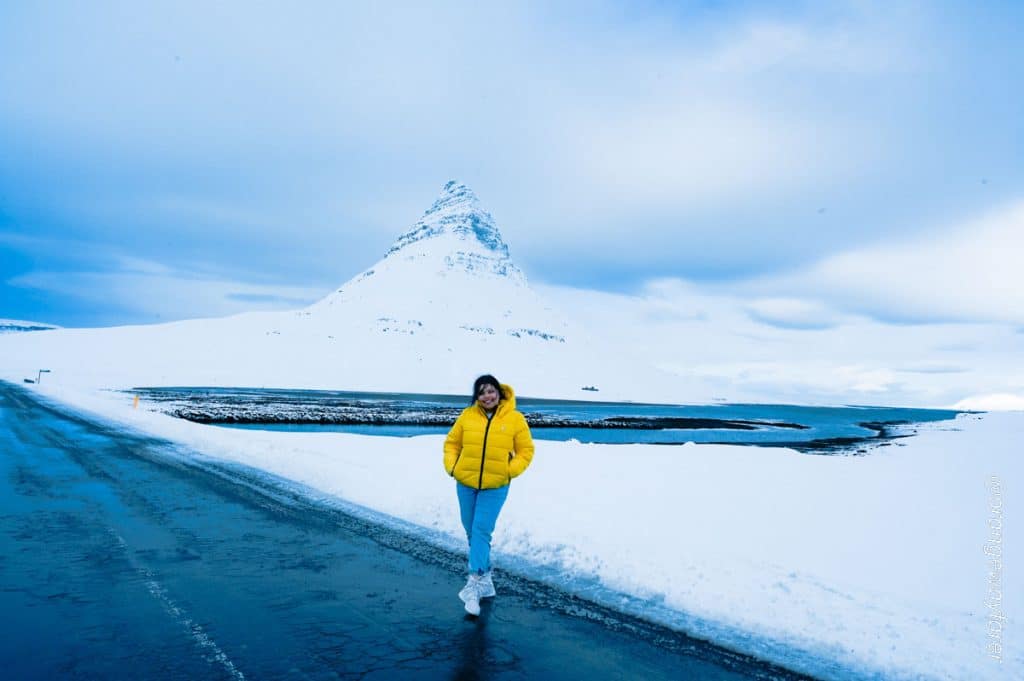
We have visited Iceland in March. We did a 10 days Iceland road trip with stops at various towns across the ring road.
March was a nice time to explore with nights pitch dark and a substantial display of northern lights every night.
However, March was one of the wettest season in Iceland, with rains and snow ravaging the western fjords and Snæfellsnes peninsula.
The first few days, we traveled from the capital Reykjavik to Vik to Hofn with an overcast sky, and snow fall that made the sea mirroring ice covered swaths of land.
It was stunning but it also made traversing a challenge, with us being car bound for the longer period of the day.
Only after we crossed Vestahorn, we had a short window of clear weather, when Akureyri had glistening sky against the backdrop of a far stretched road. It was a delight to drive on those roads.
Finally, we had a clear sky day at Blondous, a small town middle of no where and a substantial detour from the ring road where we stayed for one night.
We had a night sky full of ethereal dance of Northern lights. It went on for more than 2 hours.
High on the previous night’s show, we headed to Snæfellsnes where we had decided to rent a small chalet and enjoy the divine beauty of this island nation for a couple of days, until Iceland showed us its ugliest storm.
We were stuck in the snow as we attemped to reach the foot of Mount Kirkjufell. The shortcut road was closed. The beach roads were not exactly drivable. We got stuck and had to be rescued as the storm became worse.
In all my years of travel, that is a trauma I will never forget. Ironically, the third day sky was clear with a night that staged an outstanding northern light show (yet again). Hard to believe we were stranded the night before with car nearly broken down and buried under the snow!
It is because of the storm I would not recommend anyone to visit Iceland in March. May be September, even October is fine. But March is still the wee end of winter. Our intent was to experience the Northern lights, which is visible on a clear sky night.
The problem is come summer, Iceland will have longer daylight hours. meaning your chances of viewing northern light would be really less, like we experienced in Norway las August.
If you want to visit Iceland specifically for the northern lights (and you should), I suggest keep your travel dates and hotel bookings fluid and move as weather permits. However if you want to explore all the attractions along Iceland Ring Road, March may not be the best time. Most of the trails are clad in ice, and they do not look like the glossy Instagram pictures that made Iceland famous for the raw real nature.
For hiking, and beautiful pictures, (also a truck load of tourists) you should plan a visit to Iceland in the summer months. For a taste of both, may be visit by the end of September, when the nights would be a little longer. End of April, Month of May would be nice too. You need a small window when sky would be really dark and night should be at least 3 or 4 hours long. That way you can see northern lights in Iceland.
Given snow will start to melt, and wind would be kinder, you will also be witnessing stunning landscapes of Iceland.
If you can let go the allure of viewing Northern Lights, Iceland is a stunner in Summer. I had been to Norway in Summer and I would definitely come back for Icelandic Summer one of the summer years!