About this blog: Gorilla trekking at Bwindi National Park is an experience of a lifetime, albeit it comes at a steep price-point. Much of the park fees goes into conservation effort that safeguards the dwindling Gorilla populace of the Virunga region. I researched for years and visited Uganda to see the Gorilla. As an obese person, trekking for the mountain gorillas features as one of my top most travel memories ever.
Read more on my Uganda Travel Adventures here.
Also read: How to plan a trip to Uganda- Complete travel guide
The Bwindi national park is Uganda’s Koh e Noor of the 10+ National Park crown. The massive rainforest spread over 120+ sq KM area. It shares border with Volcanic national park in Rwanda and Virunga Mountains in Congo, erstwhile Zaire. Bwindi has been home to Mountain Gorillas for millennia.
This part of Africa is primate wonderland.
You have Bonobo matriarchs residing at one side of Congo river while the Chaotic chimps claim the other side. The patriarch Silverback peacefully share the jungle with other animals in Gorilla-land, even leopards.
Then humans arrived and things got complicated with the advent of civilization and greed for resources. They mined deep into earth and found gold. They say nasty stuff like, “Who cares about the Gorilla, it is just a monkey.”
And the story of the gorillas started to change.
Where to stay at Bwindi National Park
Depending on the sector we choose to trek for Gorillas in Bwindi, you choose your accommodation.
For example, if you trek Buhoma sector. which is one of the oldest and home of some of the most habituated Gorillas, you have a handful of traditional stays.
You may be allotted Ruhija sector, which is an hour’s drive from Buhoma and need to arrange for transport unless you stay close by.
You will know where is your gorilla family as soon as you register for the permit.
We got Buhoma sector for gorilla trekking, and booked our stay with Mahogany spring resort.
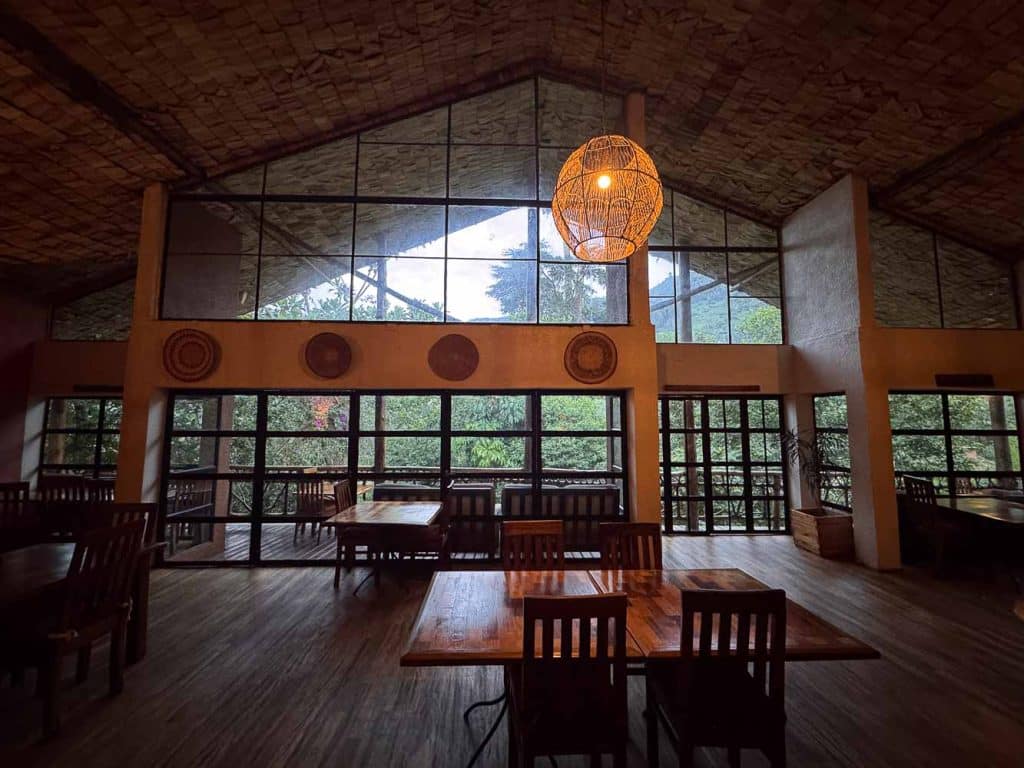
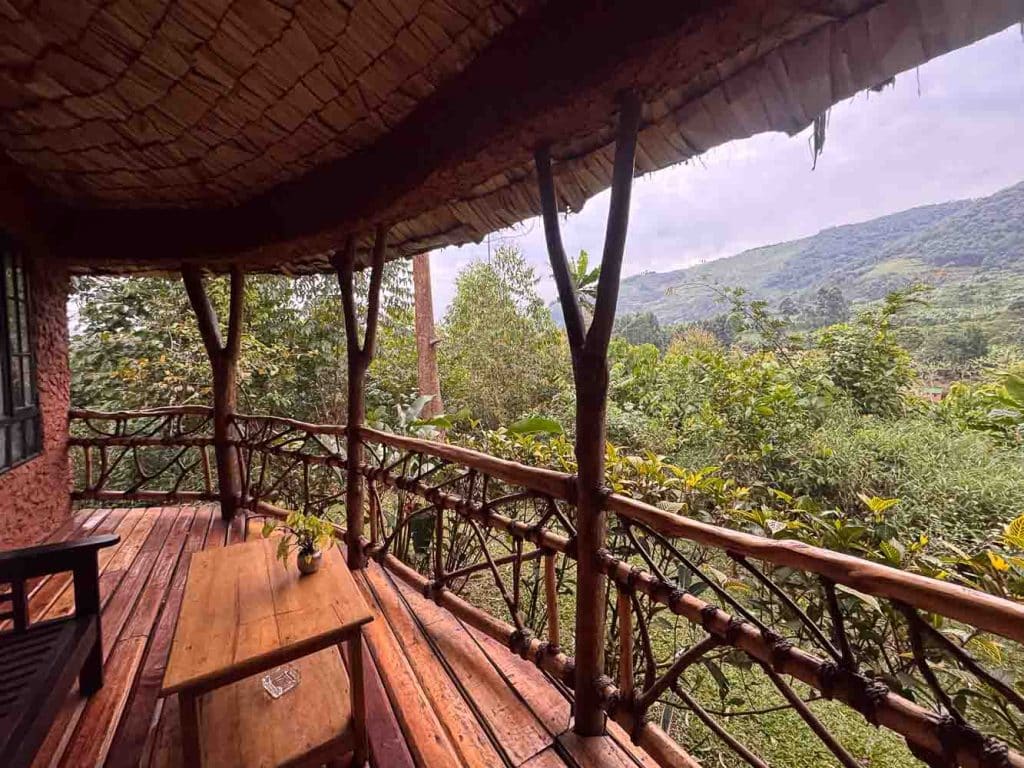
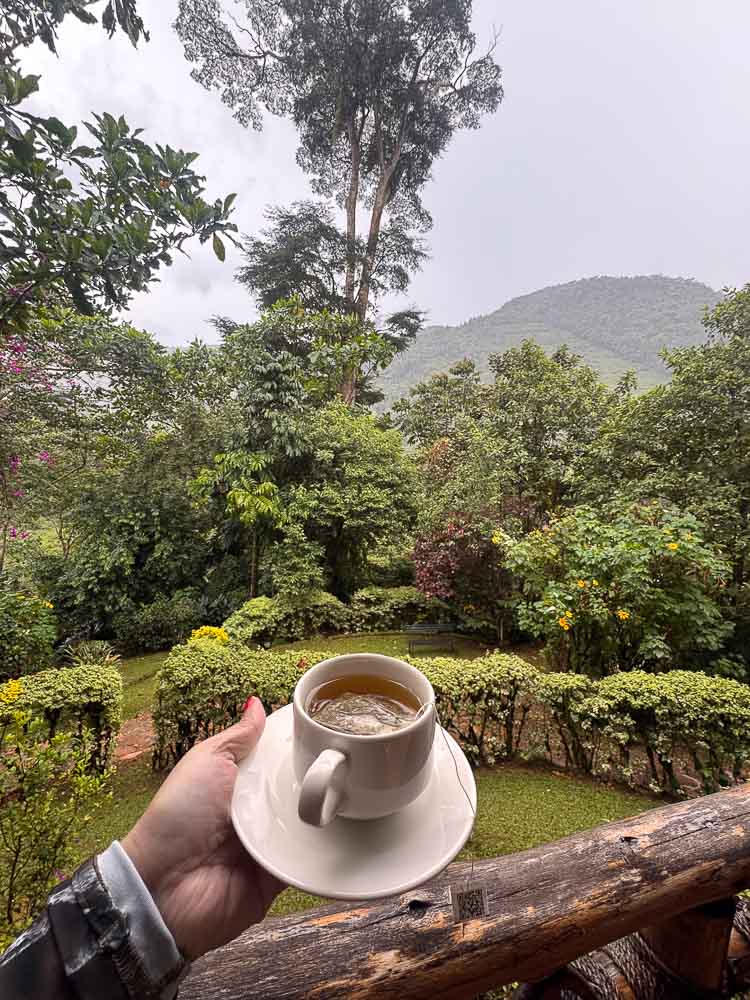
Mahogany Spring Buhoma is one of the oldest lodges of Bwindi Forest with close access to Buhoma Sector, owned by a local individual in partnership with a British person. It has a handful of cottages spread across a hilly terrain. You will walk amidst lush green canopy of rainforest and some avocado branches laden with ripe fruits, and reach your cottage. Jet ski and hot water bag awaits you in the room. From the balcony you have a view of the vague misty mountains. A river flows right next to the lodge, across which the Batwa settlement is.
What I loved the most about Mahogany Spring Lodge was the food. We stayed there for 2 nights and had 3 meals included in the cost for each day. local mushroom, avocado, Victoria fish, plantain mash- all of them were part of our meal in the hotel.
We paid roughly USD 500 per night since it was an off season. Anything before the start of 15th December is relatively not busy season in Uganda. It rained a bit. We heard stories of Gorilla families drifting towards the lodge at the peak of the lockdown, and claiming the property as their own.
Mahogany felt subtly luxurious, but more abundant with a feel of raw nature. The service stuff were exceptional.
Also read: How to plan a road trip in Uganda for 10 days
The other places to stay in Bwindi National Park are:
- Clouds Mountain Gorilla Lodge- Nkuringo sector- trek into the valley
- Gorilla Safari Lodge- Rushaga/ Nkuringo sector
- Mount Gahinga Lodge- Nyakagezi sector of Mgahinga( Fastest access from Kigali)
- Bwindi Lodge- Buhoma
Please note many of these lodges are operational only during the season, meaning during rainy season they will not be open or partially open with limited staff members.
Best time to go for Gorilla Trekking in Uganda
Bwindi Impenetrable forest is a rainforest.
You can not escape rain unless you time your visit and hope the stars align.
From Mid December to February is the short rain season, meaning a bit of rain during afternoon. The trails are relatively dry. You can see the Mountain gorillas relatively clearly.
Since it is a rainforest it is never dry, but you have a chance to walk on the relatively drier (hence easier) path in the jungle during this time. Less mud, leeches, ants and easier ascend/descend.
From March to May and Oct to Nov are again rainy months.
The day we went to see the Gorillas, 11th December, it did not rain until the wee end of one hour with had with the primates.
Experiencing rain standing deep within a rainforest added to the whole ting.
The Silverback grunts ad caves within the big trunk, which gives temporary relief until it does not. The rain is relentless. It seeps in from the large leaves, canopy overhead and drenches everything.
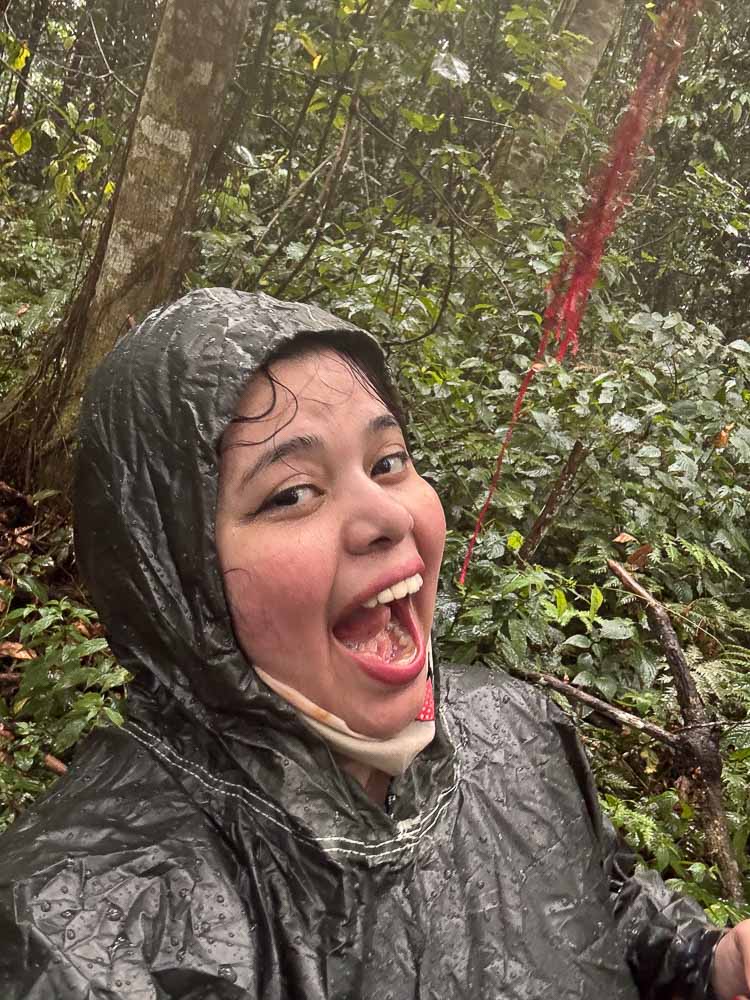
I trekked for the Mountain Gorillas in the Rain and I would do it again.
It was a short hour long bout of rain. After which the primates try to move to drier grounds, high up the mountains or in plain sight where sunrays can easily access them. They try to soak in the sunlight to dry off their thick coat.
If it rains in the morning, before your trek starts, you have a very good opportunity to see the animals in natural habitat.
I must conclude, ascending the steep mountain was a cakewalk in the torrential rain, because I had a couple of porters with me who helped in ways beyond words could ever describe.
Mountain Gorillas and a Story of Survival
Bwindi had seen tumultuous days when Mountain Gorilla number dwindled to a few hundreds.
It bounced back only when UN intervened, assigned UNESCO status to the jungles of the region, trained and educated locals, many of whom had been poachers in previous years.
The issue with Mountain gorillas is they can not survive in captivity. They need their rainforest to thrive. Hardly ever they have left their promised land, not even at the face of aggression by humans who find the volcanic soil fertile for the plantain farms.
Many people want to keep the head of a Silverback as souvenir at home. Our guide said, bushmen wanted the fur coat of gorilla to protect themselves from harsh cold.
Nothing justifies the carnage that took a huge toll to gorilla population. It took years of work, goodwill and training to turn the local population to actively try to save the gorillas. Now the numbers are closer to 1000 in the region, with 400 to 500 remaining in Uganda roughly. I have seen similar successful conservation stories in Kaziranga of Assam, where the one horned rhino was brought back from the brink of extinction.
However, Mountain Gorillas know this mountain range by the Albertine rift as their only abode.
A single pandemic, natural disaster or a regional warfare can wipe this species from the face of the earth. Which is why it is all the more pertinent to save the gorilla, especially with tourism wrapped under conservation efforts.
Also read: 25 photos that will inspire you to visit Ethiopia
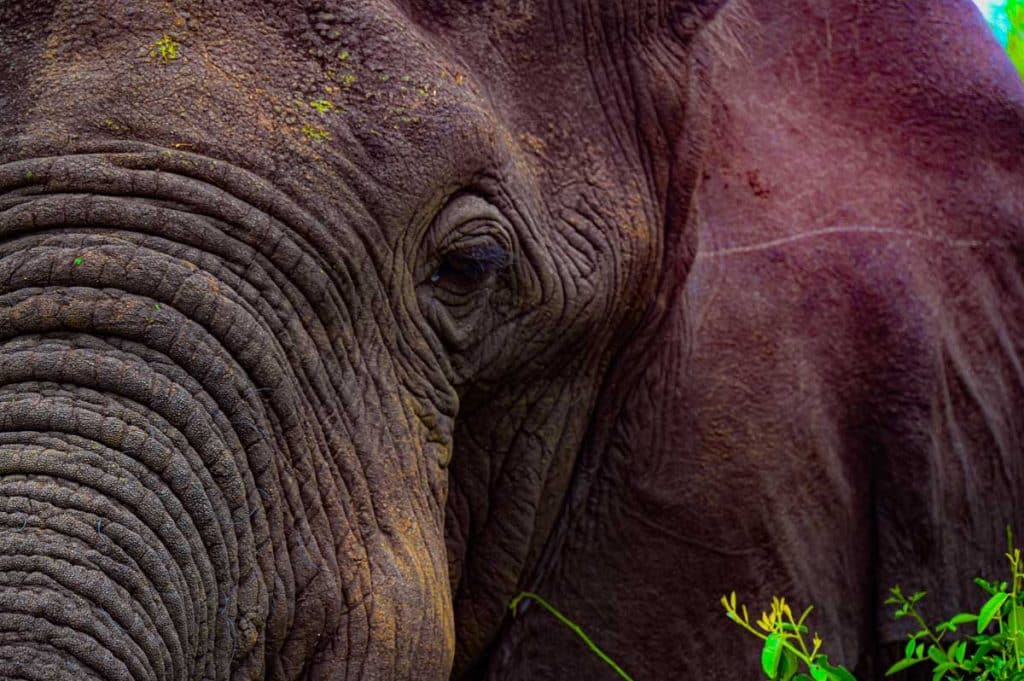
You may come to a face to face encounter with the elephants of Bwindi National Park. They are majestic but may disrupt your trekking route.
“They will come during Christmas!” Said my guide who took me for a tour to the Batwa village.
Really?
He could sense a tinge of disbelief in my voice and stated that I can ask anyone.
There would be fresh plantain and fresh produce off the farm during Christmas. They will come. They drink the liquor made of plantain!
I almost lost my Sh*t!
Mountain gorillas are fascinating. I have been to a few safari and seen the wildlife across the world, but Africa is unmatched in every way. Then comes the Gorilla and they steal the show effortlessly!
All the more so because genetically humans are very closely related to Gorilla. We saw our guide even communicate with one!
I saw a Gorilla long back at Chicago Zoo. Those are the lowland Gorillas off West Africa. They can be raised in captivity. The Chicago zoo troop was almost 20 G strong.
The best part of traveling in Uganda is the country offers pure untouched scope of natural exploration. While crossing the vast plains of Queen Elizabeth Park, we saw the Rwenzori mountain range, standing between Uganda and Congo.
Also read: Two weeks itinerary for Sri Lanka, from the tea growing highlands to the beaches of Mirissa
Why Choose Uganda for Mountain Gorilla trekking?
In Uganda you can find the Mountain Gorillas in their natural habitat at Bwindi Impenetrable forest.
It is the forest that shares borders with Volcanic national park as well as Virunga mountains, both natural habitats of the mountain gorillas.
In my research, Uganda appeared multiple times for the most viable Gorilla trekking option.
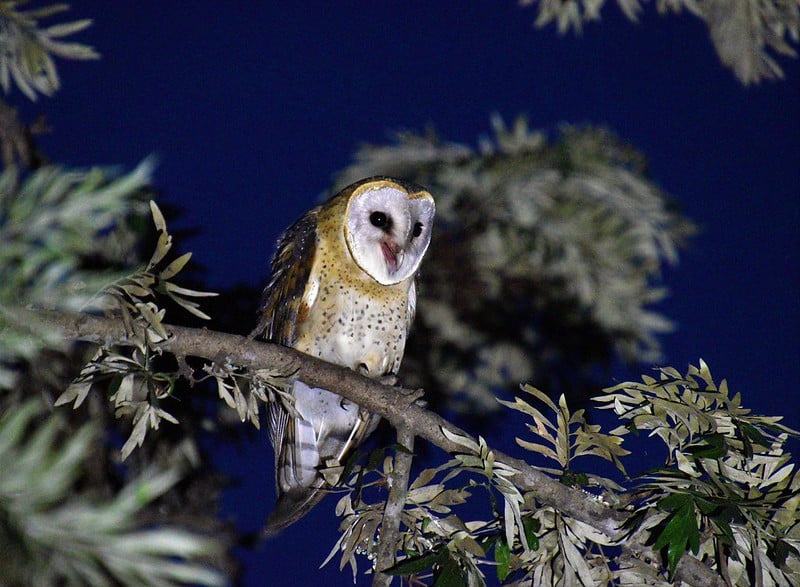
Firstly, there is more to see in Uganda beyond the gorillas. The chimpanzee trekking at Kibale National park, night safari of Murchisons fall NP, and the elusive shoebill bird of Victorian swamp featured on my bucket list.
Secondly, Uganda charges USD 800 per person for the gorilla permit. Congo charges USD 350, the lowest in the region however Congo is a wartorn country. My research did not yield a positive outlook for Congo.
Thirdly, Rwanda among the 3 viable countries in the region of Mountain gorilla trekking had the steepest price point, at USD 1600, however it almost guarantees a seamless experience with the least amount of safety threat.
I would have chosen Rwanda, but I had time in hand and Uganda seemed to be more fun when it came to experiencing more wildlife!
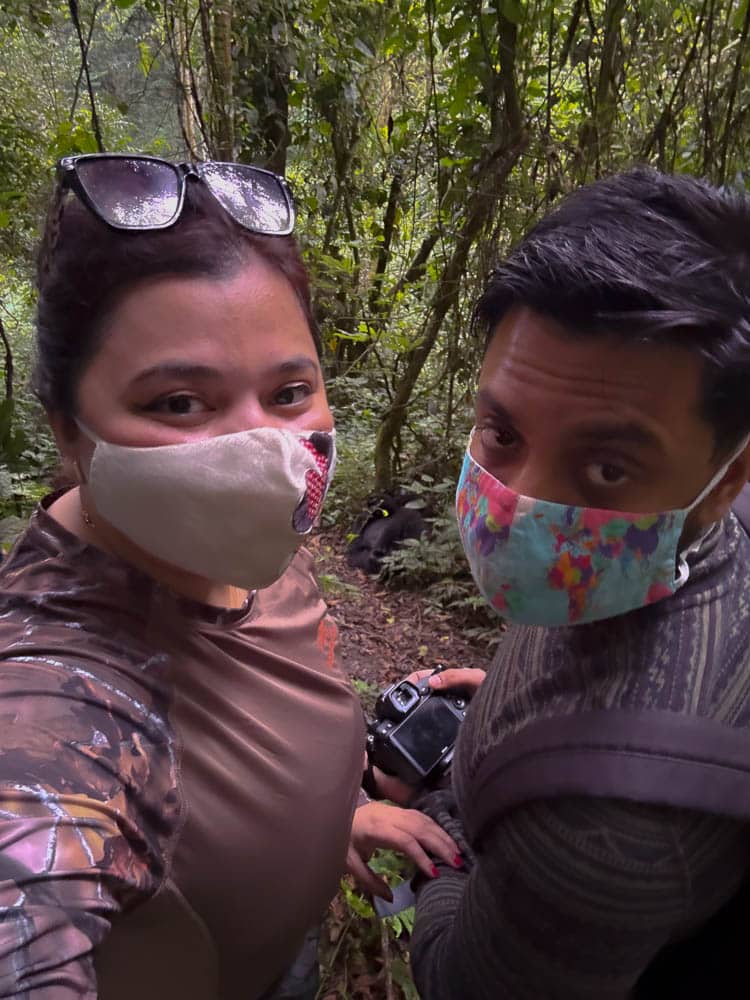
In short, I chose Uganda for Gorilla trekking because it has more activities and the price was half of that of Rwanda. Of course, the recent safe streak of politics in Uganda makes a traveler feel at ease to take a decision to visit Uganda.
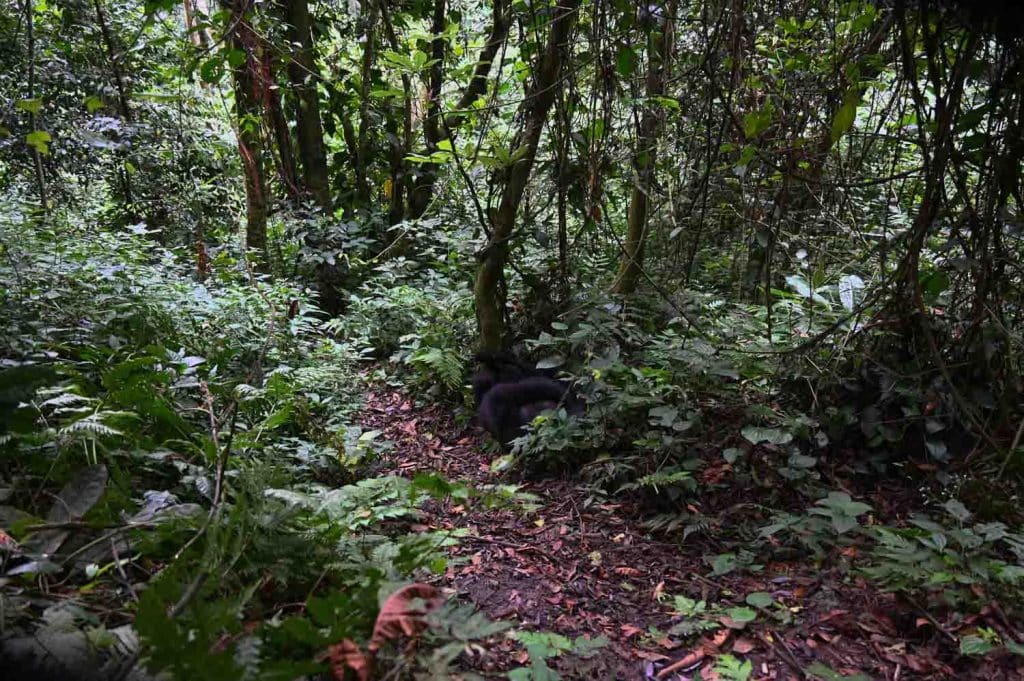
Is it worth paying USD 800 to see the Mountain gorillas
I think it is worth paying the steep price for mountain gorilla permit.
Partly because our money goes for conservation of the magnificent animals.
Partly because, this is an experience of a lifetime. I say this coming from a country where monkeys are revered and worshipped at large. I have seen various monkeys/Hanuman in close proximity growing up, from the small villages to sprawling metropolis.
Last year, we visited the Amazon and had seen a handful of different types of monkeys.
however the Mountain Gorillas are special in a way that nothing else matches with the experience.
They survived in small number and need protection. They are last of the great apes that once ruled a large portion of the Earth.
I was mesmerized by the story of Mountain gorillas and I would go back again to celebrate with them.
Probably we are the last generation who are able to witness these animals in all the glory in natural habitat. And they dont survive in confinement so there you go!
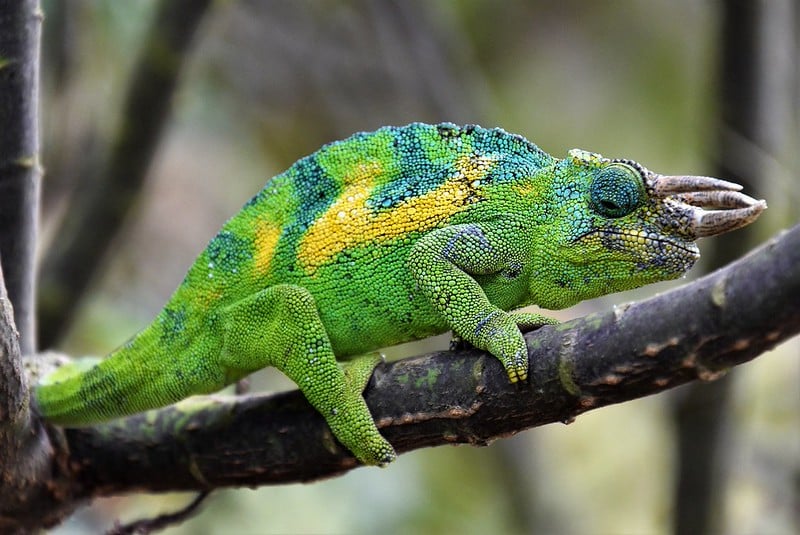
How to prepare for the Gorilla trekking in Uganda (from an obese person)
As an obese person (currently I weigh 44 lbs more than what I should Ideally be).
It took me a while to prepare for the gorilla trekking in Uganda.
I walked everyday for at least half an hour, practiced squats and did a bit of weight lifting, not to lose weight but to get stronger to be able to walk on the mountain terrain.
It is an impenetrable forest, a dense rainforest. You need to cut open your own path if the usual route is occupied (read, a forest elephant might be standing in the trail).
Being strong is not an option while going for the Mountain gorilla trekking. However you may always request for an easier route, a less walkable route and visit them, the marvellous mountain gorillas.
It is likely your wish would be granted.
How difficult is it trekking for the mountain Gorillas
Mountain Gorilla trekking in Uganda is not difficult at all.
The great apes call the mountains home. They have their own troops which are small in number anywhere between 8 to 12. They migrate. Unlike Chimpanzee, Gorillas migrate slowly.
They rest and munch on greens for the major part of the day. In morning, you are likely to spot them in one such resting phase. If you are lucky, you may catch them migrating, but it is really a rare occurrence.
Ideally, for a fit person who is keen to hike, the trek looks like the followng:
- The trek lasts from anywhere between 2 hours to 4 hours.
- You would follow your ranger who would try to co ordinate with the trackers who have gone out in the morning and have already spotted the Gorilla family.
- You have to walk the valleys, or steep mountain terrain, and cross a jungle trail to reach the spot.
- It may rain, making the trail muddy and slippery.
- the trek is not difficult, but is definitely moderate. You can hire porter service for USD 20. They help carry your camera and gears and support during the trek.
Now, I have seen a few groups with elderly people, who were keen to see the gorillas but were not eager for a strenuous hike.
They were assigned an easy trek. Sometimes, they would be close to the starting point at Buhoma village, where the Gorillas visit frequently in search of food (yes, a prime example of human wildlife conflict).
If you request for an easier hike, and are not in the best shape, you can still see the gorillas, but the experience may be underwhelming.
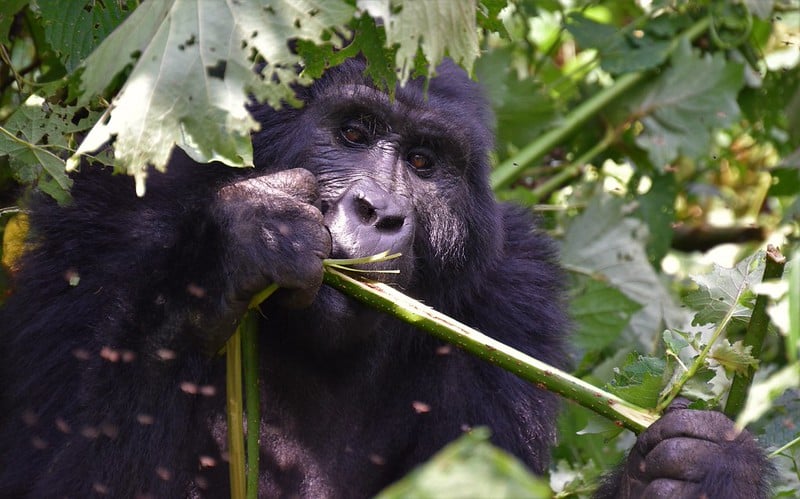
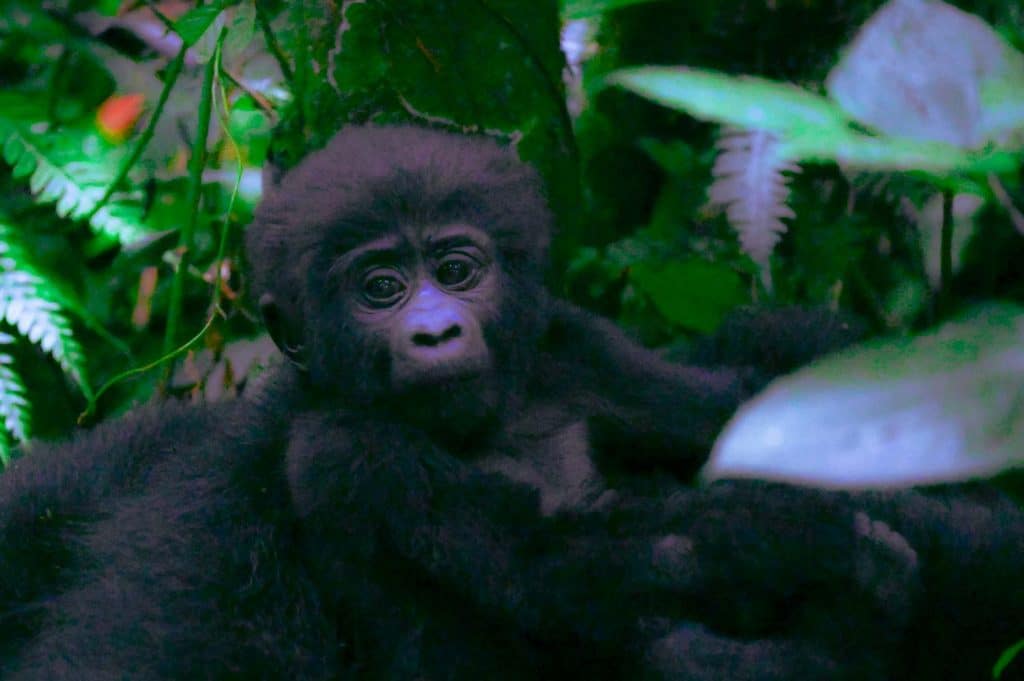
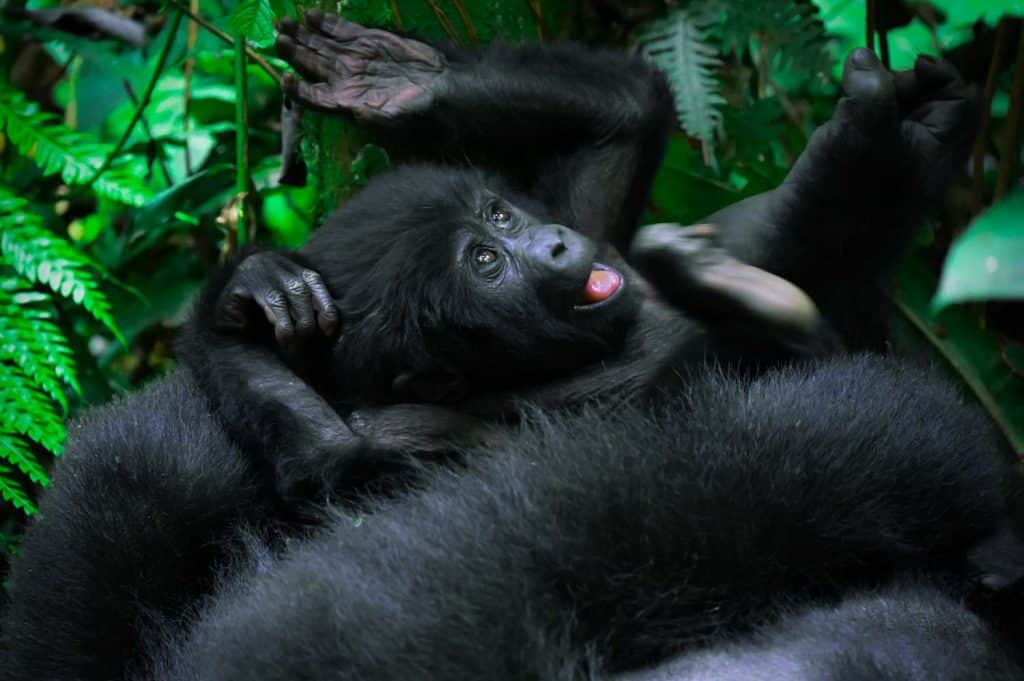
The gorillas are not very emotive. They basically ignore you and keep munching. The baby gorillas would look at you with wide eye curious questions.
Hiking to the Mountain gorillas, crossing those rainforest is an immersive experience. It humbles you and adds to the overall experience. I recommend you take the longer route.
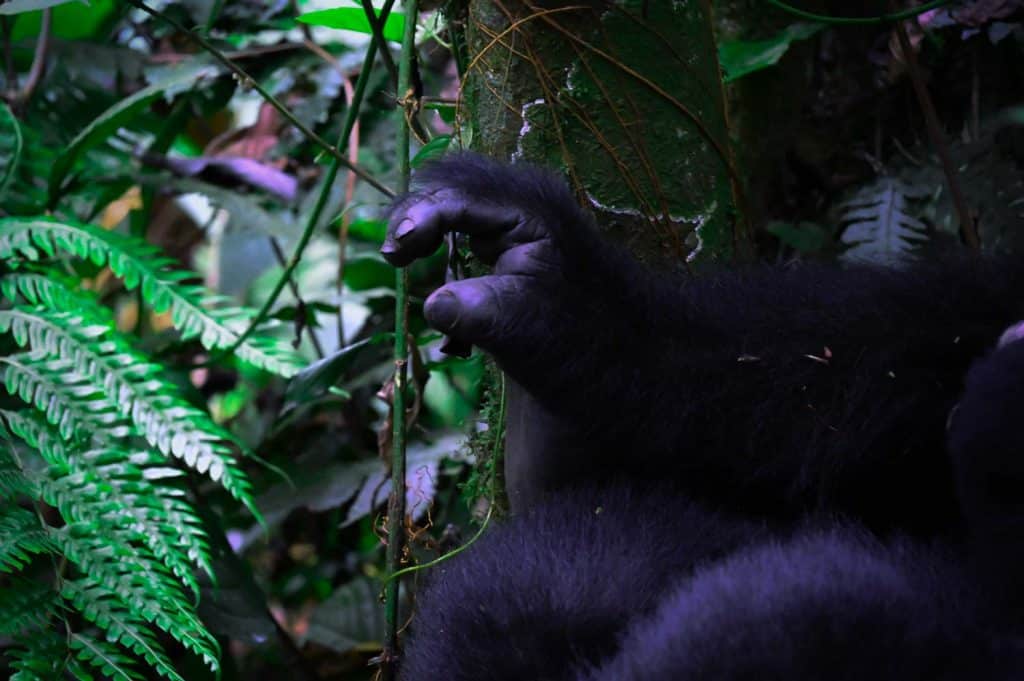
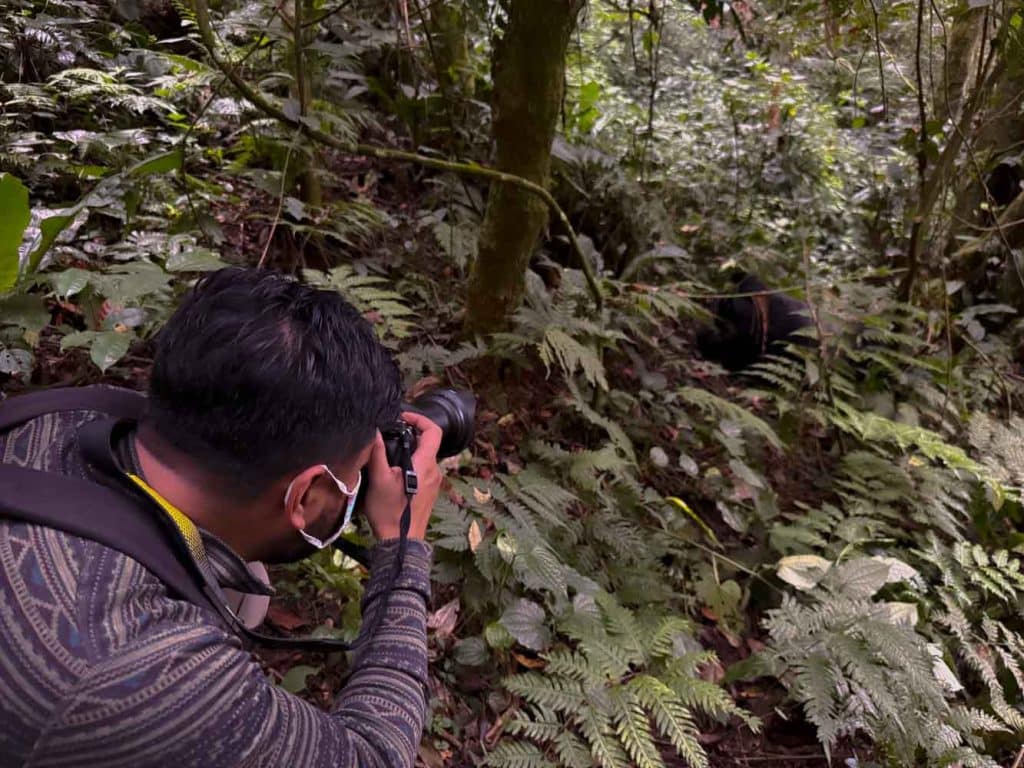
How is it like Gorilla trekking in Uganda in real life
You wake up early, often with a call from the resort.
You eat your breakfast, and pack a lunch for the road and get into the vehicle to visit the park premises.
At the gate of the park, you meet the rangers, the guides, often armed. They brief you.
The group gets divided into small groups of 7 to 8 people and further head to their designated “families”.
Each Gorilla troop is headed by a silverback, may have a few female gorillas and blackback, meaning juvenile males and of course few babies.
You can ask them to put you in specific groups, if you have specific requests (say you wanna see a baby gorilla).The day we went for the hike, there were few groups who started from the premises immediately. However we drove further for 40 minutes to start our trek.
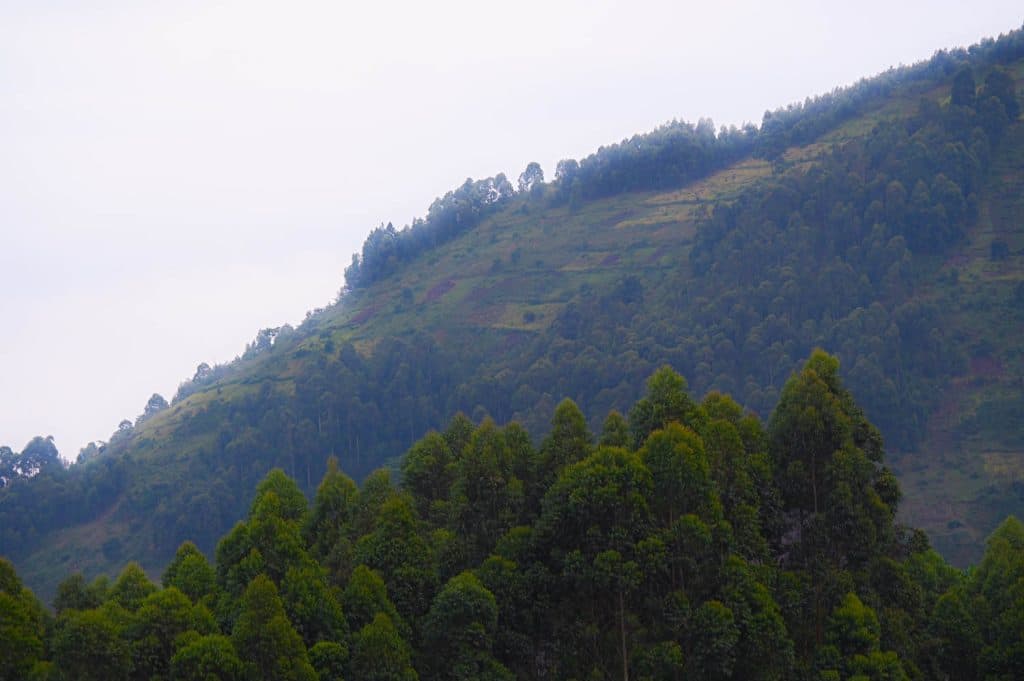
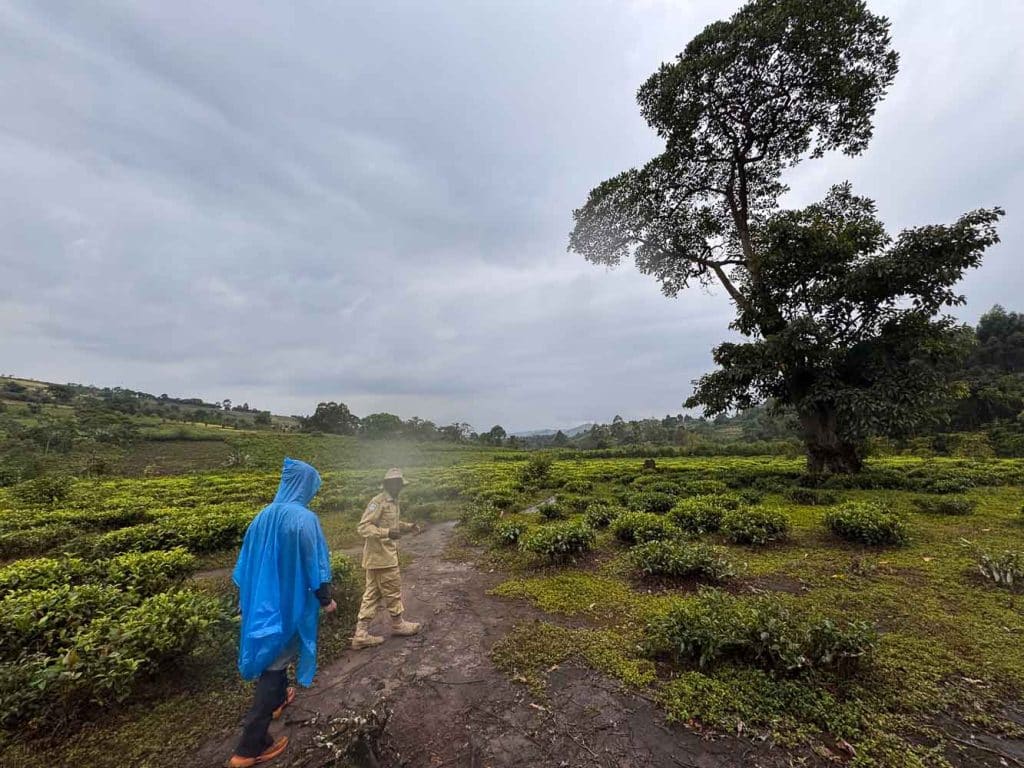
Along the red soul, rolling hills of tea and plantain plantation, we went in hoping to see the last few hundred of the majestic beast that the Mountain Gorilla are!
We were lucky. We did not have to walk for more than 25 minutes to meet our family. Most of the walk on a plateau, until the mountain took a steep descent, filled with green tickets under the canopy of the ancient rainforest.
This is where the porters were helpful. They are dwellers of the nearby villages, who get porter work on a rotation basis, twice every month for a meagre 20 bucks. Women and men alike.
They would carry your water, camera, sticks and everything!
On our way back, it started pouring heavily. I do not know how I returned. My porter took me back to the main road. I have a blurry memory of a green haze of a misty rainforest and stepping on something which felt dangerously slippery and tender, yet I made it back and now I am writing this blog, so all cool I guess!
I tipped them gently, the ranger, porters, and guides- everyone.
The rangers are there with these habituated gorilla families. Either they follow them at dawn, or they follow them at night. Gorillas do not migrate in speed.
The rangers and trackers know where they are when we start the hike in the morning. They communicate with the guide and ranger of your group. That is how you get closer to each Gorilla family.
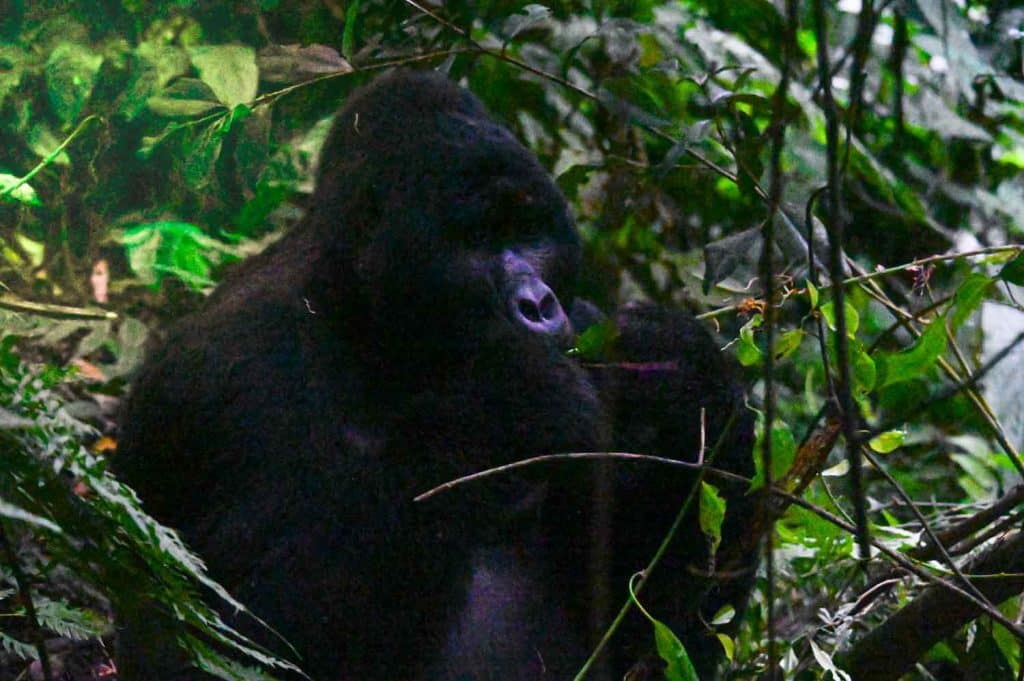
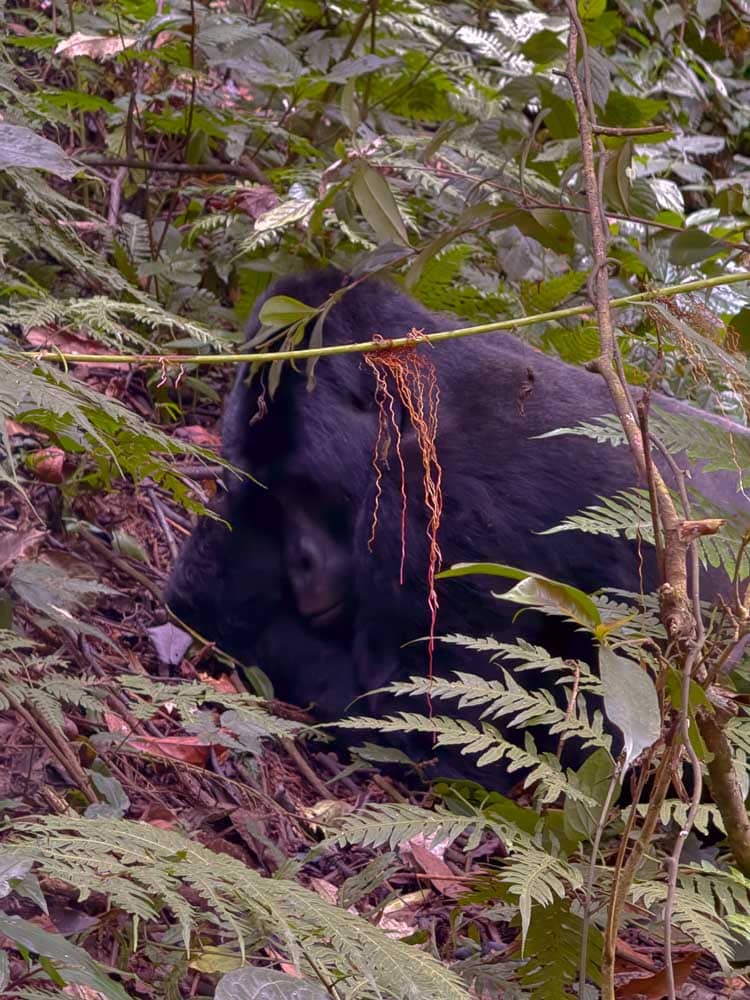
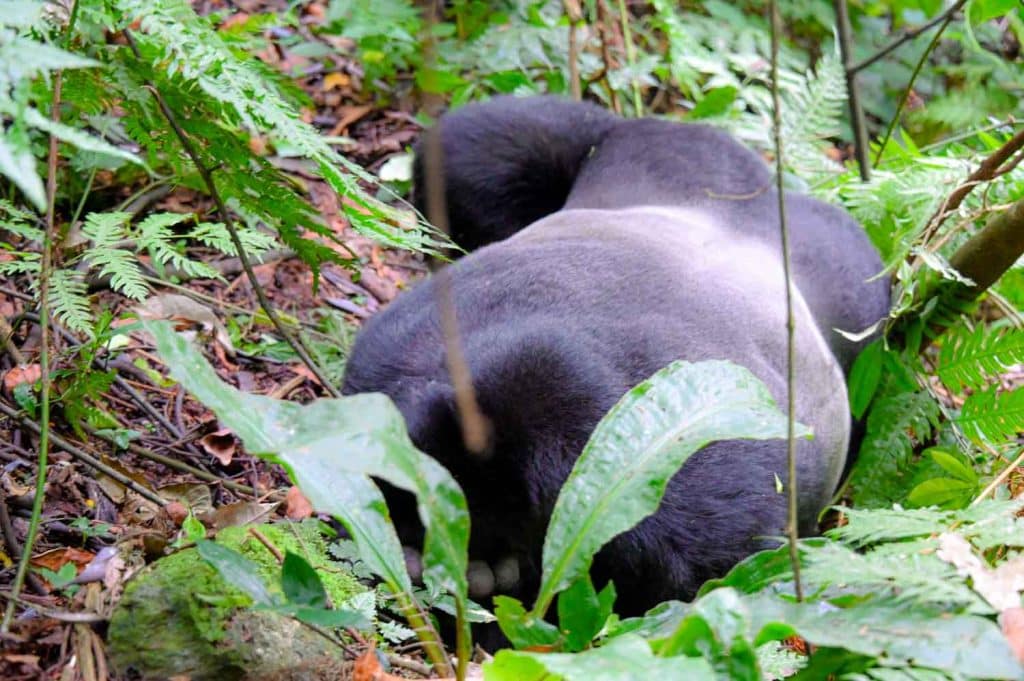
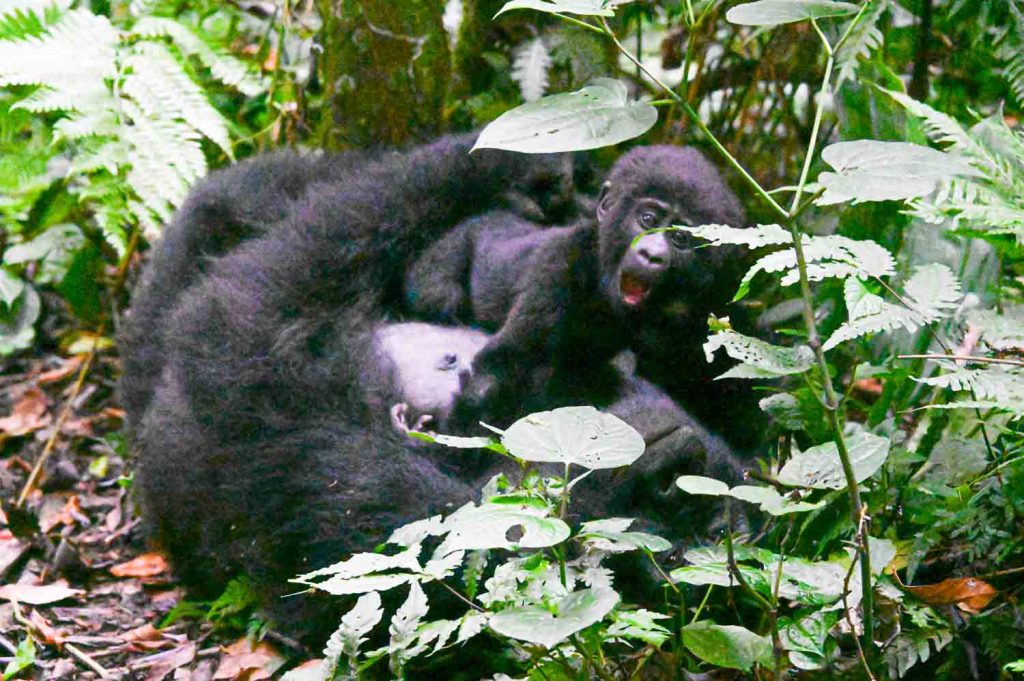
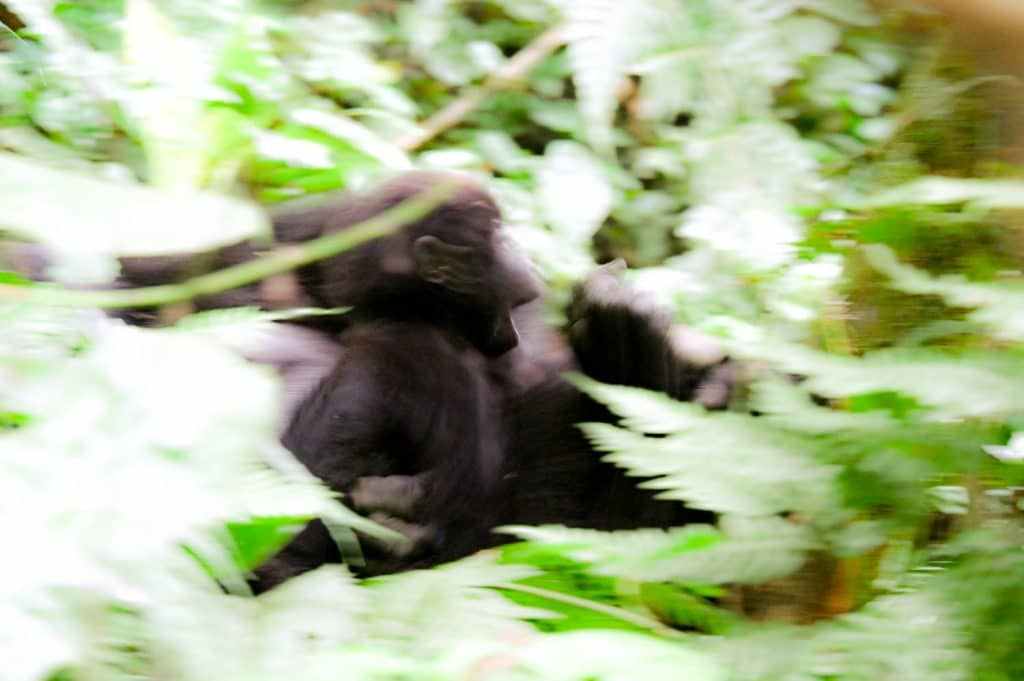
We were assigned with the group Habinyanja. During our time, the group had 8 Gorillas, of which we saw 4. A silverback ,a female with her 4 month old male baby and a black back. We spent exactly an hour as we went close to the gorillas.
The habituated gorilla groups see humans on a daily basis. They know the ranger, so much so that I could see them communicate with each other.
Gorillas rest and eat, eat for the larger part of the day. They need tons of vegetables. There are certain shrubs and bushes that they enjoy more.
We stood in awe in front of the infant and the mother who kept cuddling with each other. They took turns to give us a few curious glances. We could spot their nest on the ground made of thick foliage.
The silverback was sitting at a few meters distance, sleeping, until our rangers went and woke him up.
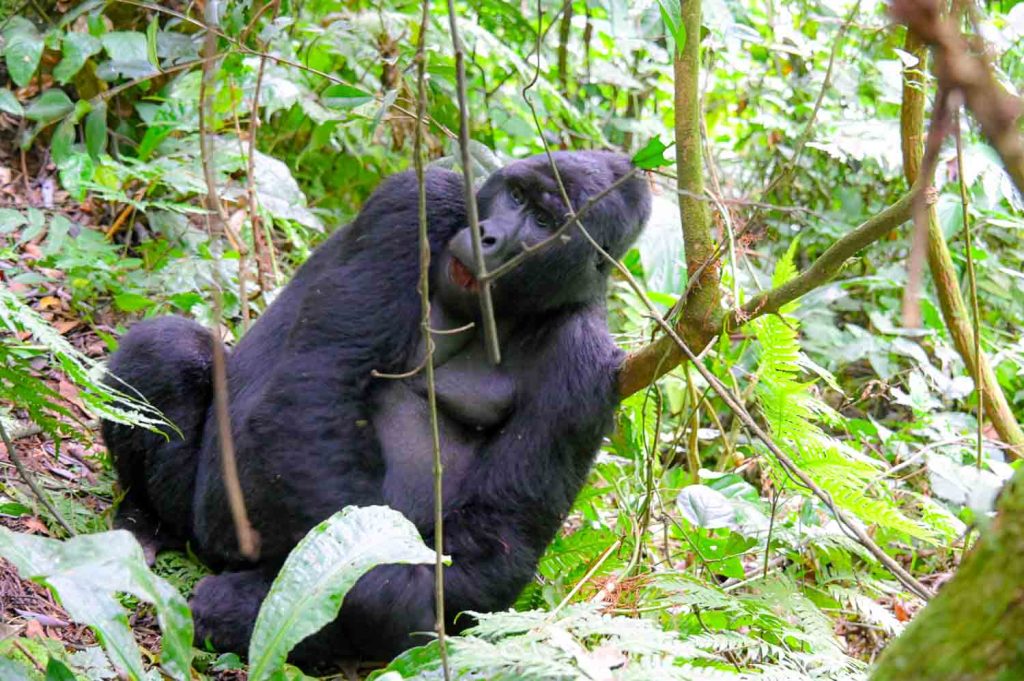
It almost felt like both of them had an understanding through the grunts and sounds they used. Gorillas have 14 different vocalizations.
He reluctantly sat up as the ranger neared him, munched on roots hanging from the tree, looked up for his woman and kid, made some grunts to which his wife gorilla replied with assurance, and he went to sleep again.
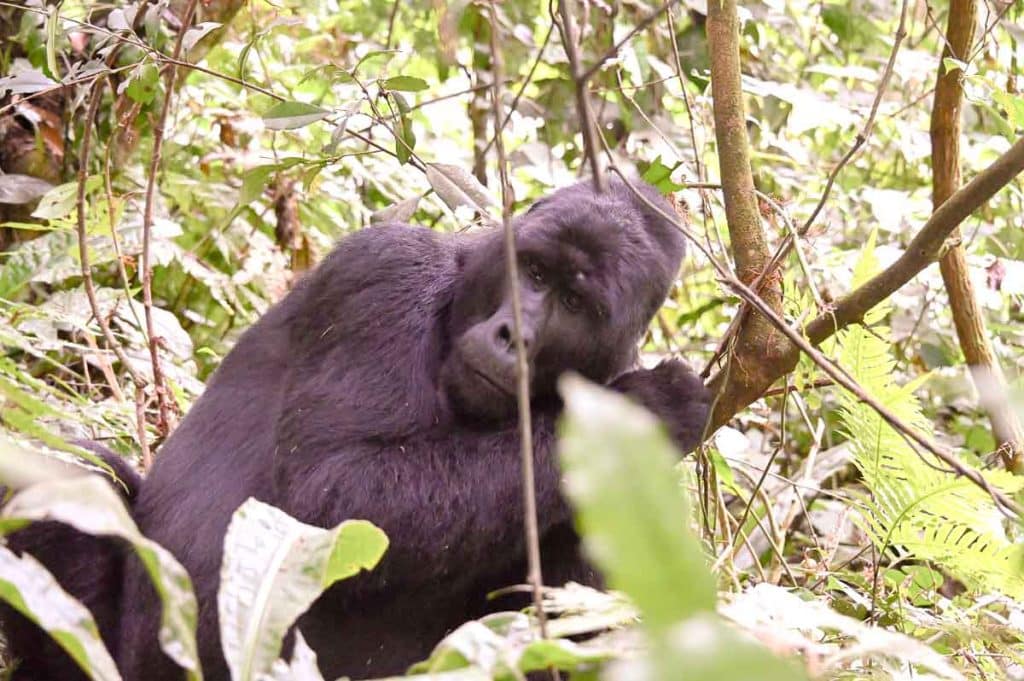
Within that time frame two juvenile blackbacks roamed around us. The silverback sat up straight as it started to rain, making an annoyed pose with his two limbs covering the body. That was such a touching moment.
We left shortly afterwards.
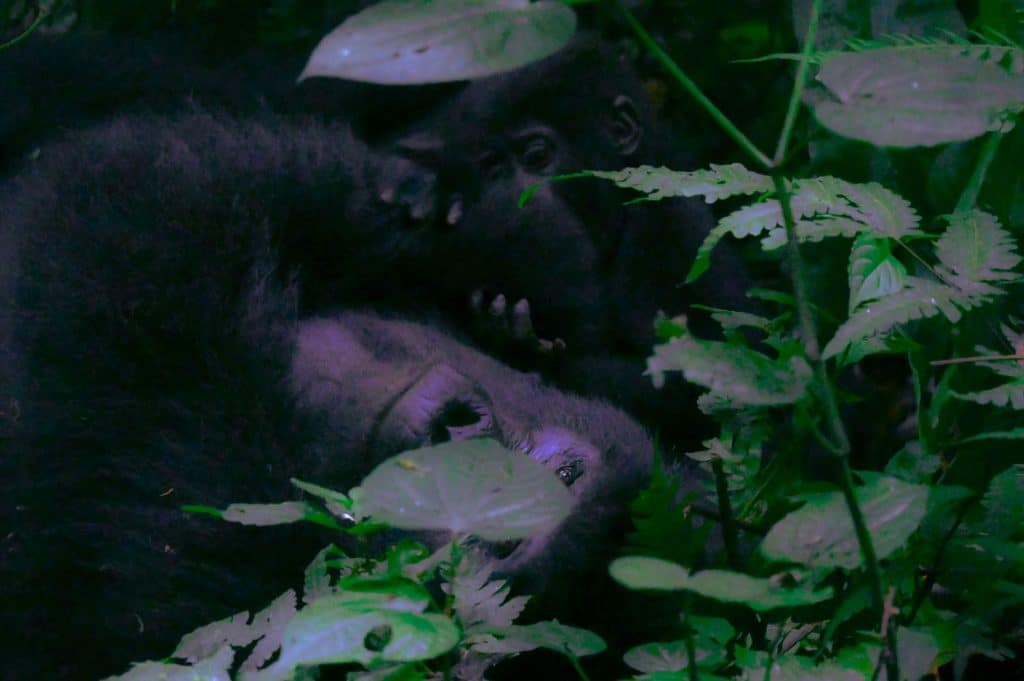
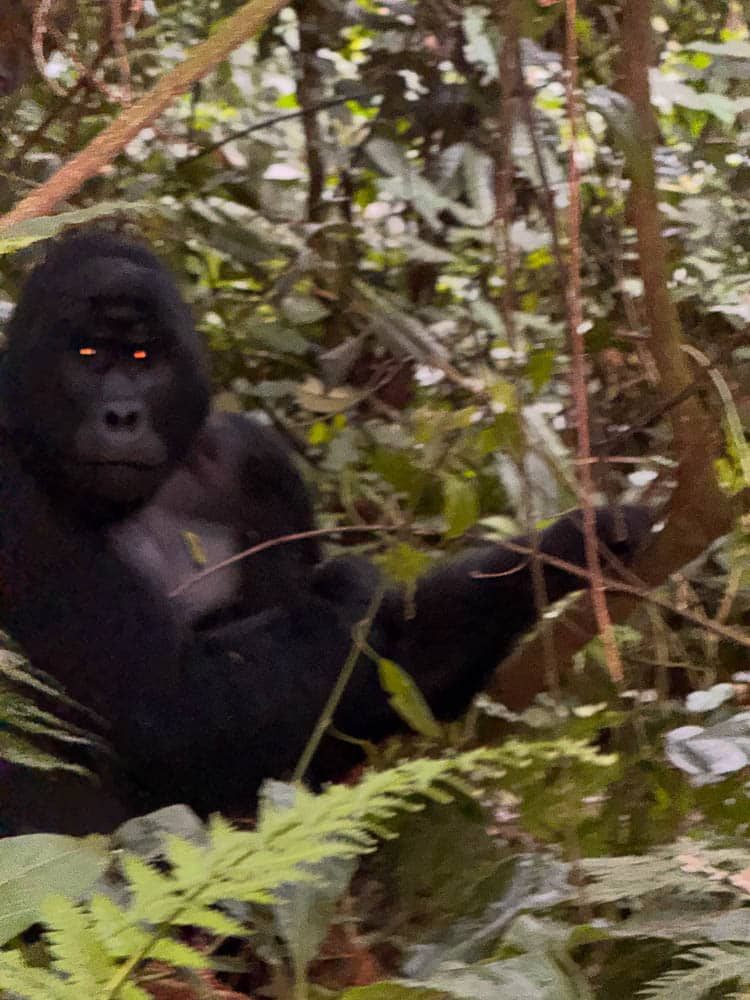
As it started to rain and we were in the thick of the rainforest I mistakenly took a picture on my phone in a flash when the great ape looked at me in shock. I felt extremely guilty.
But he is a gentle giant so he let it go. There was no chest thumping, no showing of canines.
If I could redo the whole experience, I would choose to go for the 4 hour habituation experience.
Is it safe to visit the gorilla troops at Bwindi National park
So far there has been no incident of gorillas being aggressive or attacking humans, which is not something we can write about the chimps!
It was in 1980 that the number of mountain gorillas came down to 400. It is a sheer success of every scientist, government and tourism partners and mostly of the local community that the numbers have risen a little over 1000 in the region as of today.
While tourism is not a very sustainable solution for gorilla conservation, it sure is part of the whole conservation effort.
It reduces the risk of poaching and benefits the local economy to a large extent. However, the mountains are often the last bastion for rebel militias in the region where political unrest is pretty common. In case of a threat to the militias, local rangers as well as gorillas are vulnerable to the risk.
Things to pack for Mountain Gorilla Trekking in Bwindi
- a good trekking shoe
- clothes that cover all of your body parts, ideally waterproof
- camera/lens that is protected from rain
- a stick
- lunchbox, if you are going a long way and the hotel should pack it for you
- a gator. I debated whether I should buy it, but I definitely recommend it. It not only saves your feet from ants and insects, it saves you shoe from the mud!
- sunscreen
The Habituated Gorilla Groups
For the one hour Gorilla Trekking experience you will come near a habituated Gorilla group. They would reside within a distance of 7 to 10 meters.
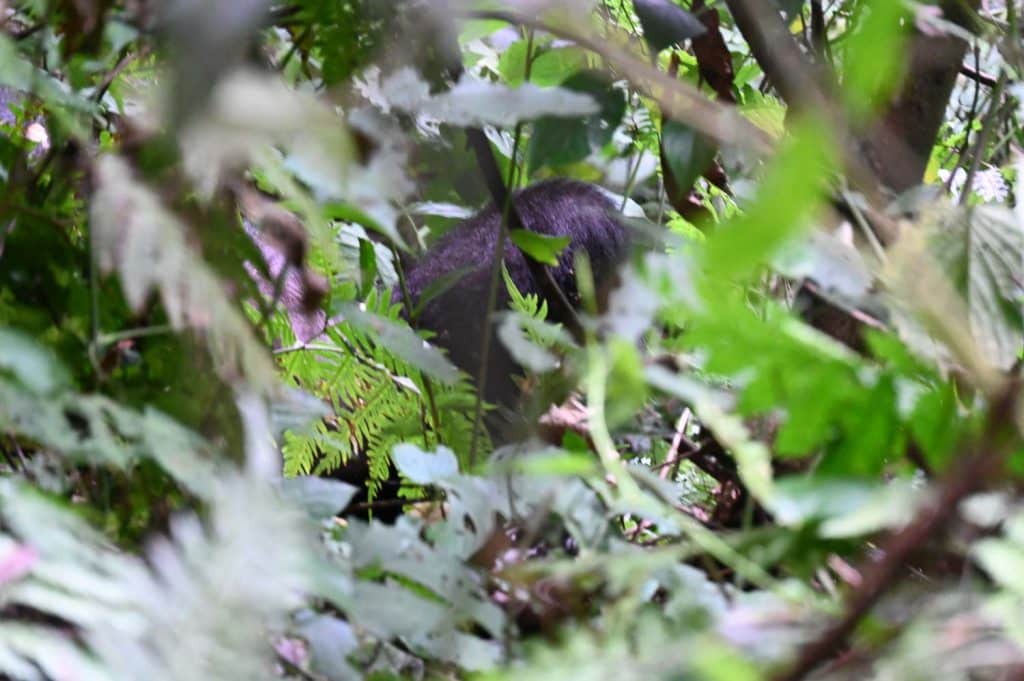
The gorillas ignore you. I have seen countless video and read blogs. They look at you, and ignore you, and then look for some more time.
Its the baby gorillas who are more inquisitive. They may come in close proximity, tuck a shoelace, and touch your camera lens. However there is no guarantee they will do it, but they might.
The silverback is there to protect his family. Unless your presence threatens the safety of his harem and children, you are safe.
Just make sure to abide by your guide, and look down if you sense any aggression from the silverback.
The habituated groups know they would be visited by the humans on a daily basis. They know it is an average daily practice when a group of humans, some of them Muzungu (non forest dwellers), would come close to them.
We found our ranger communicating with the silverback, who was enjoying a nap. He almost told him, come on sit up. To which the SB begrudgingly grunts but sat up. May be he was worried by the machete in the ranger’s hand?
It was clear that the rangers could communicate with them and they understood each other clearly.
The silverback went back to sleep within 10 minutes, after munching on some of the roots hanging from an old tree, under which the family took refuge.
Should I go for the one hour trek or habituation experience with the Mountain Gorillas?
The only regret I have from the whole Mountain Gorilla trekking experience is it was too less of a time, given the long flight time and amount of money we spent for this trip.
If I could redo this, I would either choose a 4 hour habituation experience or go multiple times.
The habituation experience comes at a steep USD 1500 price tag, which I was skeptical about in the beginning.
But hell yes, i would spend that money again to get a glimpse of these magnificent creatures.
If you are passionate about wildlife, and care about how your hard earned money is being used for conservation, I do not think you would mind paying for the whole 4 hours experience.
The four hour Mountain Gorilla Habituation experience is when you come across a wild group, who is still getting habituated with human presence. You follow their course from a distance, see them being active in the wild, and pursue their daily routine in the wild, without being the obvious hourly daily visitor to the habituated groups.
If I could redo my trip, I would sign up for the 4 hour habituation experience. It demands physical fitness. It is a more immersive and raw experience.
The porters of Bwindi National Park
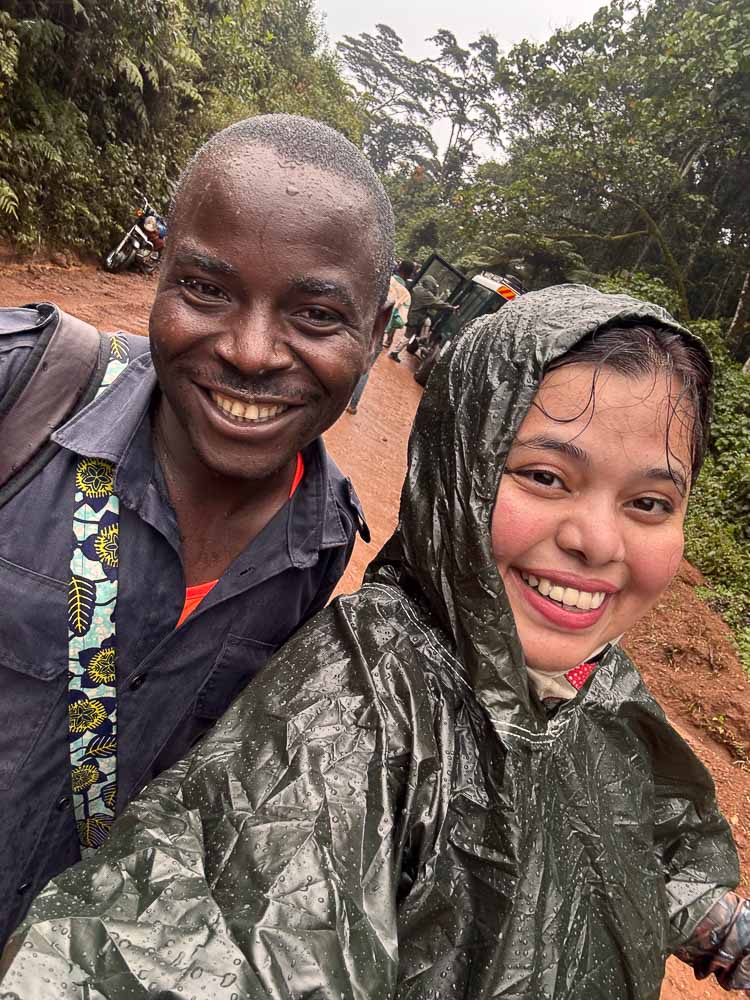
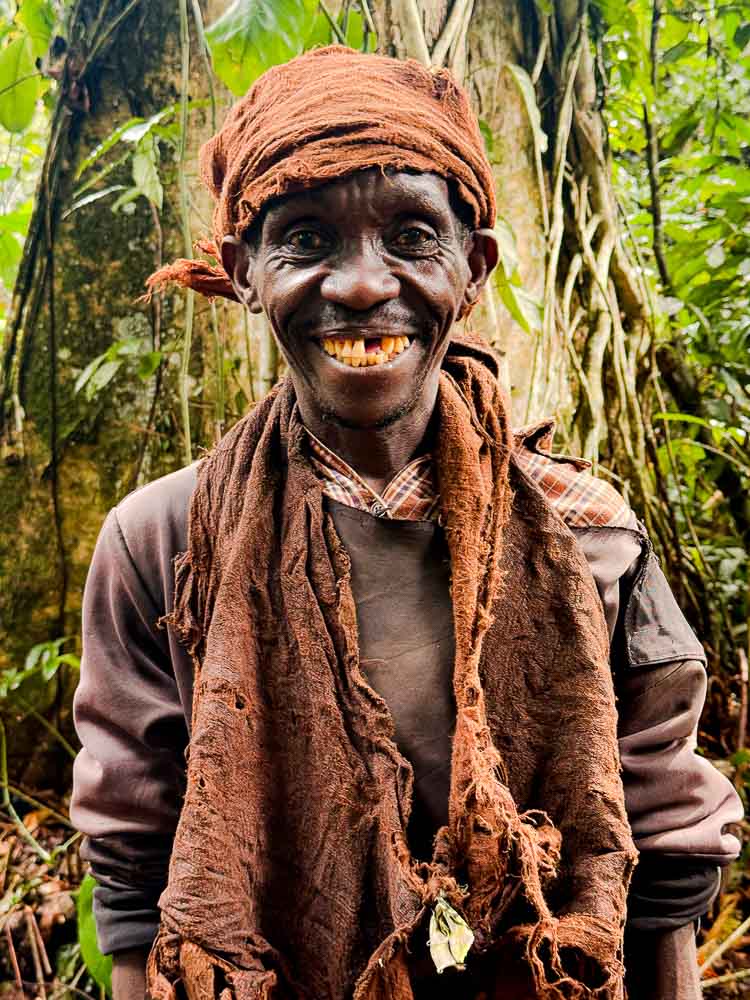
My porter was a small but stout man from the Batwa community, who were the original inhabitants of the land but was later displaced when they started conservation work in the park.
He said they get rotational work, not more than twice a month on average. And I am talking about season.
He carried my camera, pulled me a few times when I was blindsided by rain, and smiled every time.
There was a girl who came from the village and joined the group as a porter as well.
You pay USD 20 for porter service, and some tip that goes a long way in their life. It is a way to ensure the conservation effort goes to the local community as well. Porters are immensely useful, more than what I expected and they know the jungle. there is a reason why they call Bwindi, impenetrable. It is always wise to trust the locals.
Things to do at Bwindi National Park beyond gorilla trekking
You will likely have an evening or two at leisure at Bwindi. You can do the follwoing:
- Go for a village walk with the Batwa. The community actually used to live in the forest few decades back (and many fear they actively participated in poaching). They have been rehabilitated on a piece of land adjoining the forest but their livelihood is gone. Tourist visit helps them show their old tradition and earn some money. I found it was mostly staged, and underwhelming. However, on the way, I saw the people attending a political rally. That was amusing.
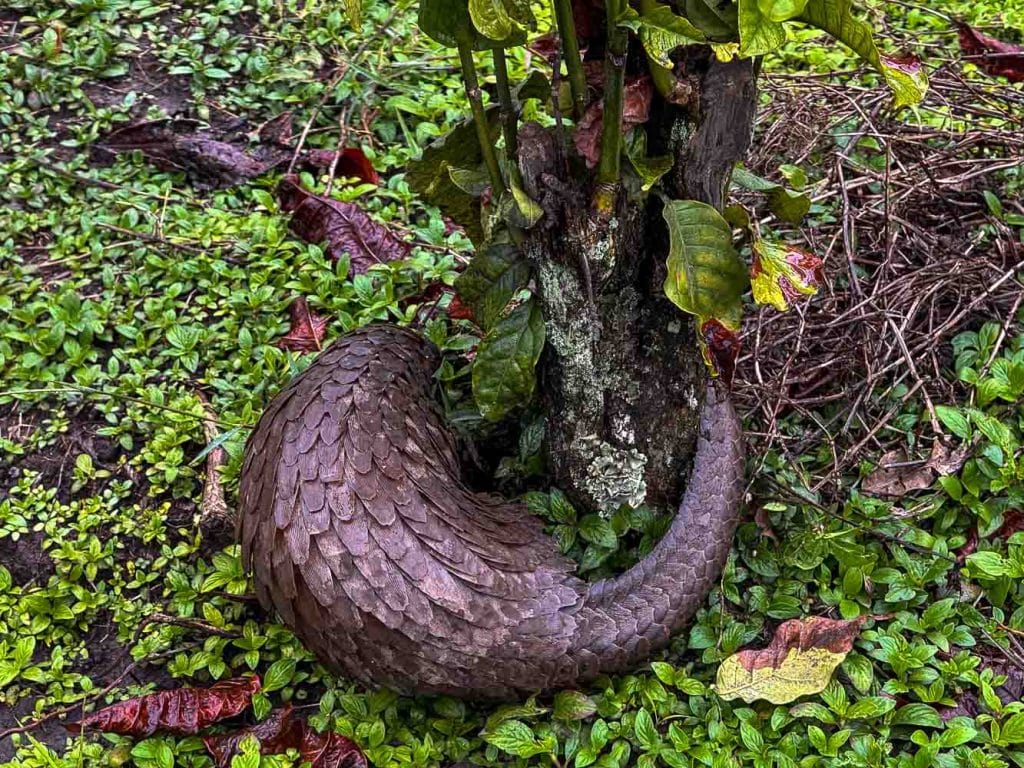
- There is a Pangolin rescue center at Bwindi. We drove down a banana orchard and paid USD 30 per person (looking back that was a rip off). The pangolin rescue center has a tree house and mushroom farming in it, and an endearing dog named Pam who accompanied us to the field where they let the pangolins roam free for our viewing pleasure. I am conflicted how to feel about it since the animals were let go from a small box.
Bwindi is one of the last strong holds of Mountain gorillas. In this region, Bwindi has the largest number of Mountain gorillas at present. I had very high hopes from the trip and Bwindi did not disappoint!
_________________________________________________________________________________________
Let’s stay connected on Facebook, Instagram, Twitter, Youtube!
This post may contain affiliate links. Please read the disclosure post. If you have liked the article, you may support it by buying using these links without any extra cost to you.
I had the same regret… I wished we did the habituation experience rather than just the one hour trek. BUT still, it was an incredible experience. Although, I read they are increasing their prices (again).